
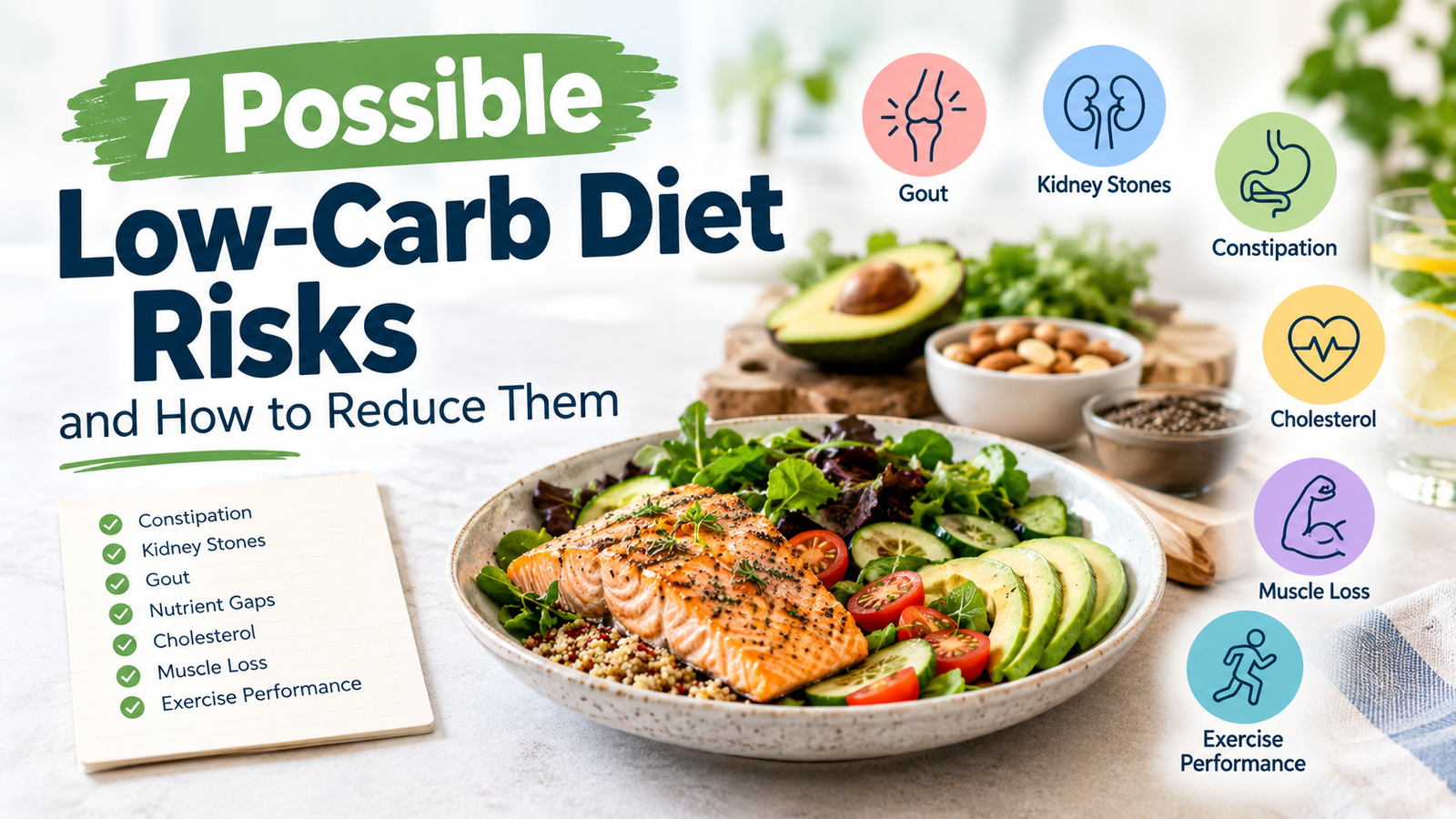
The term low carb diets can mean reducing added sugar and refined grains to a very-low-carbohydrate ketogenic diet.
The possible risks of low carb diets depend on how much carbohydrate you restrict. It also depends on which foods replace those carbohydrates and how much fiber and other nutrients you consume, and your health needs.
For some people, low carb diets can work well, but extremely restrictive plans may reduce fiber and nutrient-rich foods.
In this guide, we’ll look at 7 possible low-carb diet risks and side effects, who may be more vulnerable, and practical ways to build a healthier and more sustainable eating pattern.
Quick Answer: Are Low-Carb Diets Unhealthy?
Not necessarily.
The main concerns are more likely to arise when carbohydrate restriction becomes extreme or when nutritious carbohydrate-containing foods are replaced with large amounts of processed meat, saturated fat or other less nutritious foods.
The most important points to remember are:
- Low-carb diets are not automatically unhealthy.
- The degree of carbohydrate restriction matters.
- Food quality matters more than simply counting carbohydrates.
- Fiber, hydration, protein quality and dietary variety are important.
- People with certain medical conditions or medications should seek professional advice before making major dietary changes.
The CDC recommends a varied eating pattern that includes nutrient-dense foods such as vegetables, fruits, protein foods, healthy fats and whole grains.
Table of Contents
1. Low-Carb Diets and Gout Risk
Gout is a form of inflammatory arthritis that occurs when uric acid builds up and forms crystals in and around joints.
Diet is only one factor affecting gout. Body weight, genetics, kidney function, alcohol intake, certain medications and food choices can all play a role.
A very restrictive low-carb diet can sometimes involve increased intake of meat and other animal-based foods. Some of these foods are high in purines, which are broken down into uric acid.
According to Mayo Clinic’s gout diet guidance, people managing gout are generally encouraged to maintain a healthy weight, stay hydrated, limit certain high-purine foods and emphasize healthier foods such as vegetables, fruits, whole grains and appropriate protein sources.
Who may be more vulnerable?
People with:
- A history of gout
- High uric acid levels
- Kidney problems
- Obesity or excess weight
- A diet high in purine-rich foods
- High alcohol intake
may need to pay particular attention to their diet.
A safer approach
If you have gout or high uric acid:
- Drink adequate water.
- Avoid excessive alcohol, particularly beer.
- Limit large amounts of red and organ meats.
- Eat plenty of vegetables and fruits.
- Choose a variety of protein sources.
- Work with your healthcare professional if you have recurring gout attacks.
A low-carb diet should not be treated as a direct cause of gout. The overall eating pattern and individual risk factors matter.
2. Kidney Stone Risk
Kidney stones can develop for several reasons, including dehydration and dietary factors.
Certain high-protein eating patterns may increase kidney-stone risk in some people. The National Institute of Diabetes and Digestive and Kidney Diseases (NIDDK) explains that sodium, animal protein, calcium, oxalate and fluid intake can all be relevant to kidney-stone prevention.
This does not mean that every low-carb diet causes kidney stones.
The concern is more relevant when someone follows a highly restrictive diet that replaces many plant foods with large quantities of animal protein while also failing to drink enough fluids.
Who may be more vulnerable?
People with:
- A previous history of kidney stones
- Certain types of kidney stones
- Kidney disease
- High dietary sodium intake
- High animal-protein intake
- Inadequate fluid intake
should be especially careful.
A safer approach
To support kidney-stone prevention:
- Drink enough water unless your doctor has advised otherwise.
- Avoid excessive sodium.
- Avoid relying entirely on animal protein.
- Include appropriate plant-based foods.
- If you have had kidney stones, ask a healthcare professional what type of stone you had and whether you need specific dietary changes.
3. Constipation and Digestive Problems
One of the most common practical problems with restrictive low-carb diets is that people may unintentionally reduce their fiber intake.
Many nutritious fiber-rich foods contain carbohydrates, including:
- Fruits
- Vegetables
- Beans
- Lentils
- Whole grains
- Chia seeds
- Flaxseeds
If these foods are removed without suitable replacements, your total fiber intake may fall.
That can contribute to constipation and make a restrictive diet harder to maintain.
For example, chia seeds can be included in a balanced eating pattern as a source of dietary fiber.
You can also read our guide to finding your best diet plan for weight loss for more general guidance on building a sustainable eating pattern.
A safer approach
Rather than eliminating every food that contains carbohydrates, consider emphasizing nutrient-rich choices such as:
- Vegetables
- Whole fruits
- Legumes
- Seeds
- Nuts
- Whole grains, when appropriate
The goal is to reduce less nutritious foods without unnecessarily reducing dietary variety.
4. Cholesterol and Heart Health
Not all low-carb diets are the same.
A lower-carb diet based on vegetables, nuts, seeds, fish, olive oil and other minimally processed foods is very different from one based heavily on bacon, processed meats, butter and other foods high in saturated fat.
The American Heart Association explains that excess saturated fat can raise LDL cholesterol, which is associated with increased cardiovascular risk.
This means the important question is not simply:
“How many carbohydrates are in the diet?”
It is also:
“What foods are replacing those carbohydrates?”
Who may need extra caution?
People with:
- High LDL cholesterol
- Existing cardiovascular disease
- A strong family history of heart disease
- Other cardiovascular risk factors
should discuss major dietary changes with a healthcare professional.
A safer approach
Choose healthier unsaturated fats more often, such as:
- Olive oil
- Nuts
- Seeds
- Avocado
- Fish
Also include a variety of vegetables, fruits and other nutrient-rich foods.
The American Heart Association’s 2026 dietary guidance emphasizes vegetables and fruits, whole grains, healthy protein sources, unsaturated fats and minimally processed foods as parts of a heart-healthy eating pattern.
5. Nutrient Gaps and Bone Health
Extreme dietary restriction can make it harder to consume a wide variety of nutrients.
If someone eliminates fruits, vegetables, legumes and whole grains simply because they contain carbohydrates, the overall diet may become less varied.
This is why it is better to ask:
“What foods am I eating instead?”
rather than simply asking whether carbohydrates are good or bad.
A well-planned lower-carb diet can still include many nutrient-rich foods.
Nutrient-rich foods to consider
Depending on your individual dietary needs, a healthy eating pattern can include:
- Leafy green vegetables
- Other colorful vegetables
- Fruits
- Nuts and seeds
- Dairy or suitable alternatives
- Fish
- Eggs
- Legumes
- Whole grains, where appropriate
Bone health also depends on adequate nutrition, physical activity and other lifestyle factors.
There is not enough reason to claim that low-carb diets automatically cause osteoporosis. The more appropriate concern is whether an unnecessarily restrictive diet creates nutritional gaps.
6. Muscle Loss and Weight-Loss Concerns
One common misconception is that every kilogram lost on a low-carb diet represents body fat.
That is not necessarily true.
When carbohydrate intake drops significantly, the body uses stored glycogen. Glycogen is stored with water, so some early changes on the scale can reflect changes in water rather than only body fat.
During weight loss, preserving lean muscle is important.
A safer approach to weight loss
Focus on:
- Adequate protein
- Resistance training
- Regular physical activity
- A reasonable calorie deficit
- Adequate sleep
- A sustainable eating pattern
For a beginner-friendly approach, read our guide on how to start a sustainable weight-loss plan.
A diet does not need to be extremely restrictive to support weight loss.
7. Exercise Performance and Recovery
Carbohydrates are an important fuel source for many types of physical activity, especially higher-intensity exercise.
When someone suddenly reduces carbohydrate intake, they may experience temporary changes in energy or exercise performance while adapting.
The effect varies depending on the person, the diet and the type and intensity of exercise.
Someone doing light activity may experience little difference, while an athlete or person doing frequent high-intensity training may have different nutritional requirements.
The American College of Sports Medicine’s position stands provide evidence-based guidance on exercise, nutrition and sports performance.
If you exercise regularly
Nutritious carbohydrate sources can include:
- Oats
- Fruits
- Potatoes or sweet potatoes
- Brown rice
- Whole grains
- Beans
- Lentils
The appropriate amount depends on your individual needs, activity level and goals.
Low-Carb vs. a Balanced Diet: Which Is Better?
There is no single eating pattern that works perfectly for everyone.
Reducing refined carbohydrates and added sugars can be a useful step for many people.
For example, replacing sugary drinks, sweets and highly refined foods with vegetables, fruit, protein, healthy fats and appropriate whole-food carbohydrate sources can improve overall diet quality.
The problem occurs when “low-carb” becomes synonymous with eliminating nutritious plant foods.
The CDC notes that consuming a variety of healthy foods is preferable to eliminating an entire category such as carbohydrates.
Focus on food quality
Instead of asking:
“How can I eat as few carbs as possible?”
try asking:
“How can I build meals that provide protein, fiber, healthy fats and nutrient-rich carbohydrates?”
That approach is often easier to maintain over the long term.
Low-Carb Diet Comparison Table
| Eating pattern | Typical food emphasis | Potential concern |
|---|---|---|
| Balanced lower-carb | Vegetables, protein, fruit, healthy fats and selected whole-food carbohydrates | May still be difficult for some people to maintain |
| Very-low-carb or ketogenic | Very low carbohydrate with higher fat and moderate protein | Fiber gaps, adaptation effects and medication considerations for some people |
| Processed-food low-carb | Processed meats, high saturated fat and limited plant variety | Lower fiber and poorer overall dietary variety |
This is a general educational comparison, not individualized medical advice.
How to Lose Weight Without Extreme Carb Restriction
If your main goal is weight loss, you do not necessarily need to eliminate carbohydrates.
A sustainable approach can include the following.
1. Set realistic goals
Avoid expecting dramatic changes within a few days.
Long-term consistency matters more than extreme restriction.
2. Eat more minimally processed foods
Build meals around vegetables, fruits, protein sources, healthy fats and appropriate whole-food carbohydrate sources.
3. Prioritize protein
Adequate protein can help support muscle maintenance during weight loss.
4. Increase fiber
Vegetables, fruits, legumes, whole grains, chia seeds and flaxseeds can help increase fiber intake.
5. Stay physically active
Combine everyday movement with strength training and cardiovascular exercise that fits your fitness level.
6. Sleep well
Sleep and stress management can also influence healthy weight management.
If stress is affecting your eating habits or overall well-being, read our article about how stress and anxiety affect the body.
7. Choose a diet you can maintain
A diet that works for three weeks but becomes impossible to follow afterward is unlikely to be the best long-term strategy.
Who Should Be Careful With Low-Carb Diets?
A very restrictive diet may not be appropriate for everyone.
Speak with a doctor or registered dietitian before making major dietary changes if you:
- Have kidney disease
- Have a history of kidney stones
- Have gout or high uric acid
- Have diabetes and take glucose-lowering medication
- Are pregnant or breastfeeding
- Have a history of an eating disorder
- Take medication that may be affected by major dietary changes
- Have another medical condition requiring a specific diet
Individual medical circumstances matter, so general diet information should not replace professional medical advice.
Frequently Asked Questions
What is the difference between a low-carb diet and a keto diet?
A low-carb diet is a broad term covering different levels of carbohydrate restriction. A ketogenic diet is generally much more restrictive and is designed to produce a metabolic state called ketosis. The exact carbohydrate intake can vary between individuals and diet plans.
Is a low-carb diet unhealthy?
Not necessarily. A lower-carb eating pattern can be healthy when it includes nutritious foods and provides adequate nutrients. Problems are more likely when the diet becomes unnecessarily restrictive or relies heavily on processed foods and saturated fat.
Can a low-carb diet cause kidney stones?
A low-carb diet does not automatically cause kidney stones. However, some high-protein dietary patterns may increase kidney-stone risk in susceptible people. Hydration, sodium intake, animal protein and the type of stone all matter.
Can a low-carb diet cause constipation?
It can if carbohydrate restriction significantly reduces fiber intake. Vegetables, fruits, seeds, legumes and other fiber-rich foods can help provide dietary fiber.
Can a low-carb diet cause gout?
A low-carb diet is not automatically a cause of gout. However, some restrictive eating patterns may contain more purine-rich animal foods. People with gout should discuss their diet and treatment plan with a healthcare professional.
Does a low-carb diet cause muscle loss?
Not automatically. Rapid weight loss can involve changes in water and lean mass. Adequate protein, resistance training and a reasonable approach to weight loss can help support muscle preservation.
Are carbohydrates bad for weight loss?
No. Carbohydrates are not automatically bad for weight loss. Overall calorie intake, food quality, protein, fiber, activity and long-term adherence all matter.
Should I avoid carbohydrates completely?
Most people do not need to completely eliminate carbohydrates. Nutritious carbohydrate-containing foods can provide fiber, vitamins, minerals and other beneficial nutrients.
Can I eat fruit on a low-carb diet?
Fruit contains carbohydrates, but it can still provide fiber, vitamins, minerals and other beneficial compounds. Whether and how much fruit fits your diet depends on your individual eating pattern and health goals.
When should I talk to a doctor before changing my diet?
Talk with a healthcare professional before making major dietary changes if you have a medical condition, take medication affected by diet, have kidney stones or gout, have diabetes, are pregnant or breastfeeding, or have other specific nutritional needs.
Final Thoughts: A Balanced Approach Matters
Low-carb diets can work for some people, but extreme carbohydrate restriction is not automatically healthier.
The potential concerns discussed in this article—including constipation, kidney-stone risk, gout considerations, nutrient gaps, cholesterol concerns, muscle preservation and exercise performance—depend heavily on the overall eating pattern and the individual’s health.
Instead of treating carbohydrates as the enemy, focus on the quality of your food choices.
Choose more:
- Vegetables
- Fruits
- Fiber-rich foods
- Minimally processed foods
- Lean or plant-based protein sources
- Healthy unsaturated fats
- Appropriate portions
And remember: sustainable weight management is usually about building habits you can continue for months and years, rather than following the most restrictive diet possible.
A healthy diet is about balance, variety and consistency—not extremes.
Medical Disclaimer
This article is for general educational purposes only and does not provide medical advice, diagnosis or treatment. If you have a medical condition, take medication, or are considering a highly restrictive diet, speak with a qualified healthcare professional before making significant dietary changes.